Transition Planning in High School: Preparing Your Autistic Teen for Adulthood
The teenage years pass faster than any parent expects. Somewhere between middle school and graduation, the questions change from "What therapy this year?" to "What happens after high school?" For autistic teens, the transition to adulthood involves more variables than most parents anticipated, and the decisions made in high school often shape the decade that follows. Planning deliberately through these years is one of the most important investments in your child's future.
What Transition Planning Is
Transition planning is the process of preparing a student for life after high school, including further education, employment, living arrangements, and community participation. Under federal law, transition planning must be part of a student's IEP starting at age 16, and in many states starting at age 14. For autistic students, starting the process earlier, even if informally, is often wise.
Good transition planning is not a single meeting or document. It is a sustained, multi-year process of building skills, exploring options, making connections, and preparing both the student and family for adult life.
The IEP Transition Component
Once transition planning is required, the IEP must include specific elements: measurable postsecondary goals in education, employment, and where appropriate, independent living; transition services designed to help the student reach those goals; annual IEP goals that relate to the postsecondary goals; and a summary of performance in the final year.
This is not boilerplate. A well-written transition IEP is specific, measurable, and tailored to the student. "The student will attend college" is not useful. "The student will apply to three community colleges with disability support offices, tour each, and decide by October of senior year" is useful.
The student should be part of transition IEP meetings whenever possible. Their voice, preferences, and participation matter, and skills built through IEP meeting participation carry forward into adult self-advocacy.
Starting Self-Advocacy Early
One of the most important things to build in the teen years is the ability to speak for oneself. Autistic teens often have parents who have been strong advocates for their whole lives. This is valuable, and it can also create dependency if self-advocacy is not explicitly developed.
Start small. Have your teen practice asking for accommodations in classes, explaining their needs to a teacher, or requesting a break when overwhelmed. Let them fail a little and recover. The learning happens in the practice.
By senior year, your teen should be able to articulate their diagnosis, their support needs, and their preferred accommodations. These skills will be essential in college, at work, and in every adult setting.
Exploring Post-High-School Options
There is no single path for autistic adults. Options include four-year college, community college, transition programs specifically for students with disabilities, vocational training, supported employment, competitive employment, volunteer positions, adult day programs, and combinations of these.
Start exploring options early, ideally by ninth or tenth grade. Visit colleges and programs. Attend transition fairs. Talk to autistic adults about their paths. Let your teen's interests and capacities guide the exploration, not an assumption about what autistic adults do.
Some specialized options worth knowing about include college transition programs that provide supported inclusion at college campuses, often designed specifically for students with intellectual or developmental disabilities. These can offer real college experience with appropriate supports.
Vocational rehabilitation services, available through state agencies, can fund job training, education, and support services for qualifying young adults. Applying early, often during the junior or senior year of high school, opens doors that may not otherwise be available.
Building Life Skills
Academic skills alone do not prepare a young person for adult life. Independent living skills, social skills, self-care, and daily life management all require deliberate teaching.
Think of the skills an adult needs: managing money, using public transportation, grocery shopping, cooking at a basic level, doing laundry, scheduling appointments, using a calendar, managing medications, navigating social situations, handling a job interview, understanding a lease or a work contract. Few teens of any kind arrive at 18 with all of these mastered, but autistic teens often need these skills taught explicitly rather than assumed.
Pick a manageable number to work on each year. Eighth grade might focus on money concepts and simple cooking. Ninth grade might add public transportation skills and personal laundry. Tenth grade might include medical appointment skills and more complex social situations. Build over time, and by senior year, your teen should have a meaningful set of life skills in place.
Medical and Benefits Transitions
Pediatric medical care ends in late adolescence, typically between 18 and 21. The move to adult providers is often not smooth. Start identifying adult doctors several years before the transition.
Work with current pediatric providers to create transition summaries that accurately represent your teen's medical and developmental history. Adult providers may not have the same autism knowledge, so a detailed summary helps orient them quickly.
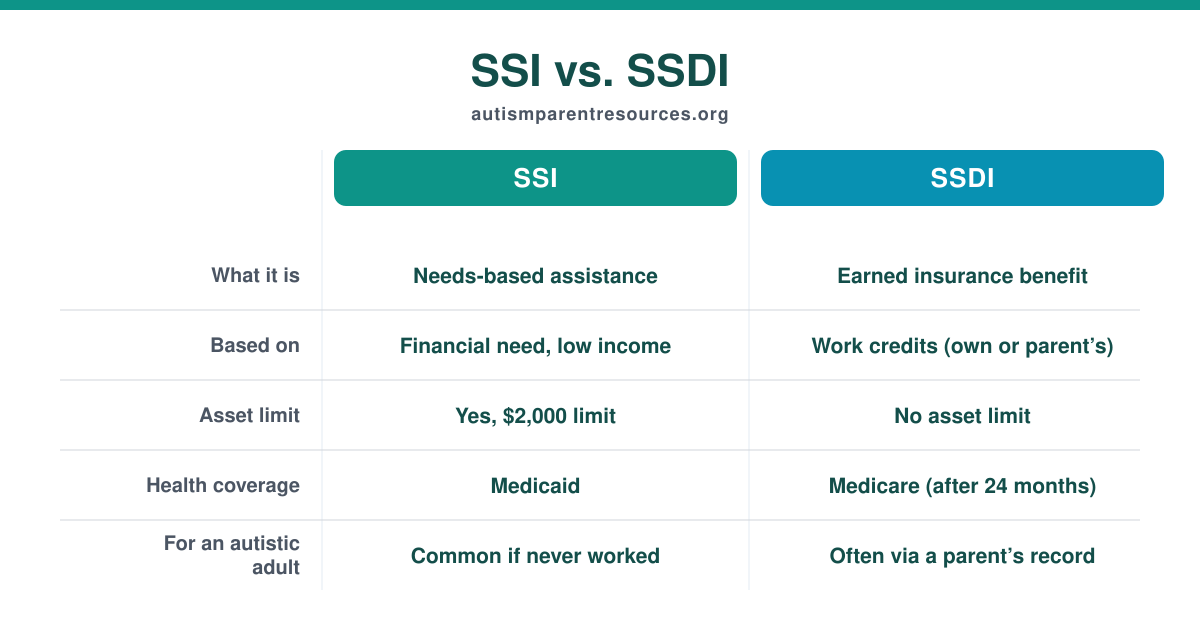
If your teen will need or apply for SSI, SSDI, Medicaid, or other benefits as an adult, start the work a year or more before age 18. The application process takes time, and having benefits in place at the age of majority prevents gaps in income or coverage.
The age 18 redetermination for youth already on SSI is an important point. Families often underestimate this. Prepare adult-standard documentation well in advance.
Legal and Decision-Making Decisions
Before age 18, work with an attorney to decide what legal and decision-making framework will be in place when your teen becomes an adult. Options range from full guardianship to supported decision-making to simply respecting your adult child's independent decision-making.
Whatever you choose, documents should be prepared before the 18th birthday. Medical power of attorney, HIPAA releases, and related documents need to be signed by the young adult. These cannot be put in place retroactively without significant legal complication.
Social Connections and Community
One of the most overlooked areas of transition planning is social connection. Schools provide a built-in social environment, even for students who find it difficult. Post-high school, that structure vanishes, and many autistic adults become isolated without deliberate attention.
Build community connections during high school that can continue after graduation. Interest-based groups, religious communities, volunteer opportunities, and autism community spaces can all provide continuity. If your teen has found meaningful peer connections at school, think about how those might continue.
Start exploring adult autism communities too. Online spaces, local meetups, autistic-led organizations, and peer support groups can offer the kind of connection that neurotypical social expectations often miss.
Finances and Economic Reality
Have honest conversations about money. Many autistic young adults need financial support from family into adulthood, sometimes indefinitely. Understanding what is realistic financially allows for planning rather than surprise.
If your adult child will likely qualify for SSI, the income is modest, covering basic needs but typically not much beyond. Families often supplement SSI through ABLE accounts, special needs trusts, and ongoing family contributions. Plan for the combination that will actually support your child's desired life.
If your adult child will work, even partial employment can supplement benefits and contribute to independence. Work experience during high school, including internships and supported first jobs, is invaluable preparation.
Housing Considerations
Where will your adult child live? For many autistic young adults, moving directly to full independence is not realistic at 18. Options include continuing to live with family, supported living programs, group homes, roommates, college dorms with supports, and gradual transitions to independent apartments.
There is no shame in any of these options. The right fit depends on your child, your family, and local availability. Some autistic adults live with family well into adulthood and thrive. Others benefit from a supported residential setting. Others are ready for independence with minimal support.
Start exploring housing options during high school. Waiting lists for some programs can be years long. Being on a list early does not commit you to anything, but it creates options.
Your Own Preparation
Transition is for parents too. The role you have played through your child's childhood will change. Some of what you have done, you will keep doing. Some you will hand off. Some you will grieve.
This is a good time for your own support: a therapist who understands family transition, conversations with parents who are a few years ahead of you, and attention to your own life beyond caregiving. Your adult child's life is ahead of them. Yours is also ahead of you.
The Five-Year Arc
Think of transition planning as a five-year arc, roughly eighth or ninth grade through a year or two after high school graduation. Each year builds on the last. No single year carries the whole plan.
Year by year, skills grow. Options narrow productively. Documents get signed. Supports get arranged. At the end, your adult child steps into the life they are ready for, with the supports in place that they genuinely need.
Not perfectly. Never perfectly. But prepared.
The Work Is the Gift
Every hour spent on transition planning is a gift to your future adult child and to yourself. The parents who do this work in high school find adult life less chaotic and more sustainable. The parents who do not often find themselves scrambling during the early 20s to put supports in place that should have been created years earlier.
Your teen is becoming their own person, with their own life. Your job in high school is to help them build the foundation for that life. The work is real, but so is what grows from it.